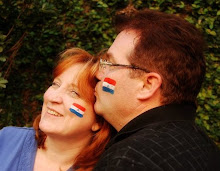
Thanks Josh!
Tuesday, August 18, 2009
Humor me!
Allow me a moment to share some personal things of interest to my family and friends. Jewel moved into the dorm on Friday night. My son and his wife drove her there from Tampa and helped her get situated. My darling daughter in law knew I was depressed not to be able to be there for Jewel on her first school days. This is one of the down sides to being a foreign missionary, but Naomy took pictures of the entire event so that we could feel a part of it all.
Monday, August 17, 2009
Raising Children Overseas
Have you heard of the term TCK? TCK stands for Third Culture Kid, but what exactly is a TCK? The definition, taken from the book of the same title, is as follows:
I wanted to encourage those of you raising your children overseas by the following survey results. The survey was carried out by MK CART/CORE. A group of 10 sending agencies (Mission agencies) surveyed 608 ATCK's (adult third culture kids) and it is obvious they do well academically.
*30% of the respondents graduated from High School with Honors
*27% were elected to National Honor Society
*73% graduated from university
*25% graduated from university with honors
*3% were Phi Beta Kappas
*11% were listed in Who's Who in American Colleges and Universities.
Another survey revealed that a high percentage of TCK's go on to post secondary school education. And yet another survey, done in 1993, showed that while 21% of the American population as a whole had graduated from a 4 year college or university, 81% of TCK's had earned at least a bachelor's degree. Half of them went on to earn master's or doctorate degrees.
This was written by an Australian ATCK who grew up in India.
"Uniquely Me" by Alex Graham James.
What is interesting, is that I find reading the above to be quite melancholic, but my children seem to find comfort in it. They are glad to see that others feel as they do. A separate group of TCK's that somehow belong together, whether they were raised in Asia, Africa, Europe...matters not. They belong to each other. They do not call any certain place home, for them, home is a group of people like themselves, other TCK's who have experienced the same type of background.
TIME magazine ran a cover story last year on the skills and abilities that American students will need in a globalized world. They said that the American student needs to develop certain skills in order to compete globally. Whether we like it or not, the world is shrinking and our children and grand children will need to now who to adjust to this globalization.
1.Global-trade literate
2.Sensitive to foreign cultures
3.Conversant in different languages
I couldn't help but think,"Hey, MK's(missionary kid) and TCK's(third culture kid) have a great head start!" I have watched my children communicate cross-culturally with great ease. I am often amazed how my children can Instant Message with several people in different languages at the same time, while listening to an Italian opera. Gives me a headache, but they are often unaware that they are going back and forth between three, or even four, languages.
MK's (TCK's) are able to think out side of the box. Actually, they can't stand to be put in a box at all! They are able to think creatively because often growing up in different cultures, they had to, in order to survive being the minority. They are able to accept that another culture may have a better way. They are often able to see how two distinct perspectives can be combined to produce an even better method.
For parents raising MK's (TCK's), don't feel discouraged about the education you may think your children are being deprived of by not living state side. You are actually preparing them for a bright, fruitful future. God needs followers who are not afraid to go beyond the narrow mental and cultural borders so many of us occupy.

Pictured here are our family's TCK's in the jungle, Christmas 1999. All have been home schooled.(My children and my nieces and nephews, all grew up in Venezuela.)

These are the same children, plus the youngest, Christmas 2007 in the US.
( My daughter Jackie is substituted by my daughter in law, Naomy)
Three have married and two of them and their spouses are in college. One is now a missionary wife and mother, one is a Pastor, three more are attending college in the US.
We are proud of them all!
You know you're a TCK when:
- "Where are you from?" has more than one reasonable answer.
- You've said that you're from foreign country X, and your audience has asked you which US state X is in.
- You flew before you could walk.
- You speak two languages, but can’t spell in either.
- You feel odd being in the ethnic majority.
- You have three passports.
- You have a passport but no driver's license.
- You go into culture shock upon returning to your "home" country.
- Your life story uses the phrase "Then we moved to..." three (or four, or five...) times.
- You wince when people mispronounce foreign words.
- You don't know whether to write the date as day/month/year, month/day/year, or some variation thereof.
- The best word for something is the word you learned first, regardless of the language.
- You get confused because US money isn't color-coded.
- You think VISA is a document that's stamped in your passport, not a plastic card you carry in your wallet.
- You own personal appliances with 3 types of plugs, know the difference between 110 and 220 volts, 50 and 60 cycle current, and realize that a transformer isn't always enough to make your appliances work.
- You fried a number of appliances during the learning process.
- You think the Pledge of Allegiance might possibly begin with "Four-score and seven years ago...."
- Half of your phone calls are unintelligible to those around you.
- You believe vehemently that football is played with a round, spotted ball.
- You consider a city 500 miles away "very close."
- You get homesick reading National Geographic.
- You cruise the Internet looking for fonts that can support foreign alphabets.
- You think in the metric system and Celsius.
- You may have learned to think in feet and miles as well, after a few years of living (and driving) in the US. (But not Fahrenheit. You will *never* learn to think in Fahrenheit).
- You haggle with the checkout clerk for a lower price.
- Your minor is a foreign language you already speak.
- When asked a question in a certain language, you've absentmindedly respond in a different one.
- You miss the subtitles when you see the latest movie.
- You've gotten out of school because of monsoons, bomb threats, and/or popular demonstrations.
- You speak with authority on the subject of airline travel.
- You have frequent flyer accounts on multiple airlines.
- You constantly want to use said frequent flyer accounts to travel to new places.
- You know how to pack.
- You have the urge to move to a new country every couple of years.
- The thought of sending your (hypothetical) kids to public school scares you, while the thought of letting them fly alone doesn't at all.
- You think that high school reunions are all but impossible.
- You have friends from 29 different countries.
- You sort your friends by continent.
- You have a time zone map next to your telephone.
- You realize what a small world it is, after all.
I know I have a lot of ex-pat readers and even several Adult Third Culture Kids, as well as younger MK's, what would you add to the above list? Was your
experience as a TCK positive or negative?
"A third culture kid is a person who has spent a significant part of his or her life outside of their parents' culture. The TCK builds relationships to all of the cultures, while not having full ownership in any. Although elements from each culture are assimilated into the TCK's life experience, the sense of belonging is in relationship to others of similar background."
I wanted to encourage those of you raising your children overseas by the following survey results. The survey was carried out by MK CART/CORE. A group of 10 sending agencies (Mission agencies) surveyed 608 ATCK's (adult third culture kids) and it is obvious they do well academically.
*30% of the respondents graduated from High School with Honors
*27% were elected to National Honor Society
*73% graduated from university
*25% graduated from university with honors
*3% were Phi Beta Kappas
*11% were listed in Who's Who in American Colleges and Universities.
Another survey revealed that a high percentage of TCK's go on to post secondary school education. And yet another survey, done in 1993, showed that while 21% of the American population as a whole had graduated from a 4 year college or university, 81% of TCK's had earned at least a bachelor's degree. Half of them went on to earn master's or doctorate degrees.
This was written by an Australian ATCK who grew up in India.
"Uniquely Me" by Alex Graham James.
I am a confusion of cultures. Uniquely me.I think this is good because I can understand the traveler, sojourner, foreigner, the homesickness that comes. I think this is also bad because I can not be understood by the person who has sown and grown in one place. They know not the real meaning of homesickness that hits me now and then. Sometimes I despair of understanding them. I am an island and a United Nations. Who can recognize either in me but God?
What is interesting, is that I find reading the above to be quite melancholic, but my children seem to find comfort in it. They are glad to see that others feel as they do. A separate group of TCK's that somehow belong together, whether they were raised in Asia, Africa, Europe...matters not. They belong to each other. They do not call any certain place home, for them, home is a group of people like themselves, other TCK's who have experienced the same type of background.
TIME magazine ran a cover story last year on the skills and abilities that American students will need in a globalized world. They said that the American student needs to develop certain skills in order to compete globally. Whether we like it or not, the world is shrinking and our children and grand children will need to now who to adjust to this globalization.
1.Global-trade literate
2.Sensitive to foreign cultures
3.Conversant in different languages
I couldn't help but think,"Hey, MK's(missionary kid) and TCK's(third culture kid) have a great head start!" I have watched my children communicate cross-culturally with great ease. I am often amazed how my children can Instant Message with several people in different languages at the same time, while listening to an Italian opera. Gives me a headache, but they are often unaware that they are going back and forth between three, or even four, languages.
MK's (TCK's) are able to think out side of the box. Actually, they can't stand to be put in a box at all! They are able to think creatively because often growing up in different cultures, they had to, in order to survive being the minority. They are able to accept that another culture may have a better way. They are often able to see how two distinct perspectives can be combined to produce an even better method.
For parents raising MK's (TCK's), don't feel discouraged about the education you may think your children are being deprived of by not living state side. You are actually preparing them for a bright, fruitful future. God needs followers who are not afraid to go beyond the narrow mental and cultural borders so many of us occupy.
Pictured here are our family's TCK's in the jungle, Christmas 1999. All have been home schooled.(My children and my nieces and nephews, all grew up in Venezuela.)

These are the same children, plus the youngest, Christmas 2007 in the US.
( My daughter Jackie is substituted by my daughter in law, Naomy)
Three have married and two of them and their spouses are in college. One is now a missionary wife and mother, one is a Pastor, three more are attending college in the US.
We are proud of them all!
- "Where are you from?" has more than one reasonable answer.
- You've said that you're from foreign country X, and your audience has asked you which US state X is in.
- You flew before you could walk.
- You speak two languages, but can’t spell in either.
- You feel odd being in the ethnic majority.
- You have three passports.
- You have a passport but no driver's license.
- You go into culture shock upon returning to your "home" country.
- Your life story uses the phrase "Then we moved to..." three (or four, or five...) times.
- You wince when people mispronounce foreign words.
- You don't know whether to write the date as day/month/year, month/day/year, or some variation thereof.
- The best word for something is the word you learned first, regardless of the language.
- You get confused because US money isn't color-coded.
- You think VISA is a document that's stamped in your passport, not a plastic card you carry in your wallet.
- You own personal appliances with 3 types of plugs, know the difference between 110 and 220 volts, 50 and 60 cycle current, and realize that a transformer isn't always enough to make your appliances work.
- You fried a number of appliances during the learning process.
- You think the Pledge of Allegiance might possibly begin with "Four-score and seven years ago...."
- Half of your phone calls are unintelligible to those around you.
- You believe vehemently that football is played with a round, spotted ball.
- You consider a city 500 miles away "very close."
- You get homesick reading National Geographic.
- You cruise the Internet looking for fonts that can support foreign alphabets.
- You think in the metric system and Celsius.
- You may have learned to think in feet and miles as well, after a few years of living (and driving) in the US. (But not Fahrenheit. You will *never* learn to think in Fahrenheit).
- You haggle with the checkout clerk for a lower price.
- Your minor is a foreign language you already speak.
- When asked a question in a certain language, you've absentmindedly respond in a different one.
- You miss the subtitles when you see the latest movie.
- You've gotten out of school because of monsoons, bomb threats, and/or popular demonstrations.
- You speak with authority on the subject of airline travel.
- You have frequent flyer accounts on multiple airlines.
- You constantly want to use said frequent flyer accounts to travel to new places.
- You know how to pack.
- You have the urge to move to a new country every couple of years.
- The thought of sending your (hypothetical) kids to public school scares you, while the thought of letting them fly alone doesn't at all.
- You think that high school reunions are all but impossible.
- You have friends from 29 different countries.
- You sort your friends by continent.
- You have a time zone map next to your telephone.
- You realize what a small world it is, after all.
I know I have a lot of ex-pat readers and even several Adult Third Culture Kids, as well as younger MK's, what would you add to the above list? Was your
experience as a TCK positive or negative?
Friday, August 14, 2009
Floors
Before living in the jungle, I had never put much thought into the making or care of dirt floors. I assumed they would be care free! Not so.
The first few years in the village, we only had dirt floors. This is because the cost of flying cement out to the village by plane was very expensive. And then, the fact that all the sand and gravel had to be dug out of the river bed during dry season when the river is at its most shallow, carried up to the village and hand mixed with water which you also hand carry, bucket by bucket, slows down the process greatly.
So, dirt floors it was! When making a dirt floor, the first step is to dig down and level the floor as much as possible. Then, using water and a heavy tamp, you begin to pound away. You must use enough water to dampen the floor, without actually making mud. This process goes on for several days in each room.
After the floor is deemed 'finished', you may then begin to use the room. Dirt floors do need to be swept daily. Lint, thread, and other debris does accumulate just as on any floor. Each day the floor is swept with a handmade broom. Once all debris is removed, you sweep the floor yet again, this time adding water to the floor as you sweep.
This is to settle the dust which comes from walking on and sweeping of the floor. If you do not keep the floor dampened, it will turn to dust and everything in the room, including small children, will be dusty. The dirt is of a high clay content and leaves an orange stain on everything. I had orange feet for years!
Dirt floors do not show dirt, but it is amazing how trash, such as paper and such, will show up! The other problem with dirt floors is when you have accidents, such as spills. How to clean it up? There are many vermin and insects and if you leave anything organic, you will be overcome.
I learned this when we first arrived and our children were all still small. We all came down with malaria and had several bouts of vomiting. How do you clean that up? With a shovel! Then you bring in fresh dirt to fill in the holes.
I did learn that by occasionally adding kerosene to the water I used on the floors, I was able to keep many insects at bay.
We finally laid a cement floor in the main room after about a year and a half . It took us several days to carry up all the water we needed for the cement. We had been collecting the sand and gravel from the river for a few weeks and we were excited to finally lay the floor, by hand. What a job!
Once it was dry, we prepared a concoction for sealing the floor. I heated kerosene on the stove and melted candles into it. We then applied this while still hot to the floor. It worked great! I kept the floor polished by adding 1/4 cup kerosene to each mop bucket. Again, to fight the bugs as well as add shine.
We slowly added floors to the house and eventually added up our costs to be nearly $15,000 US! For rough, hand laid cement floors. The floors helped our children's health by cutting down on parasites and also the ever present "nigua".
A "nigua" is a small burrowing tick which lives in the jungle dirt. They especially like to burrow into the toes and even under the toe nails. They are barely visible to the naked eye, but once under the skin, the nigua lays an egg sack which grows and grows and grows... until the eggs hatch and all the new baby niguas begin to reproduce! Not fun. Neither is it fun to dig them out of the tender nail bed.
I once had to remove an entire nail of my toe to get to an egg sack under the nail. OUCH!!! And, of course, any opening in the skin is likely to become infected. So the floors, though expensive, were needed and greatly appreciated.We would eventually come to the point of feeling the small niguas before they even burrowed.
A new problem occurred when we laid the first floor. The Sanema chew tobacco. They keep a large plug of it under their lower lip at all times. This produces a green slimy spittle. The Sanema generally spit a lot! They spit out the nasty spittle. On my floors.On my walls. It was a constant source of irritation to me.
I finally had to come to accept it. I did keep a spray bottle of bleach and paper towels handy and taught them to clean it themselves. The bleach was also needed to clean up after the many diaperless babies that came to visit each and every day.
Needless to say, our only furniture was wood or plastic so that it could be cleaned and disinfected daily. I felt it was better to have things I did not mind them using, than to have nice things, but perhaps worry that it would be damaged. I did not want 'things' to come between me and the people I was there to serve.
On the other hand, I did feel it was wise to teach them what behavior would be expected of them by the Venezuelans in town. After gaining their confidence, I was able to teach them that spitting would not be acceptable in town. Nor would babies without diapers! Nor looking inside through windows...nor using yards as an out house... nor walking in unannounced ... nor burping loudly at the table...and many other activities deemed perfectly acceptable in their own culture.
The first few years in the village, we only had dirt floors. This is because the cost of flying cement out to the village by plane was very expensive. And then, the fact that all the sand and gravel had to be dug out of the river bed during dry season when the river is at its most shallow, carried up to the village and hand mixed with water which you also hand carry, bucket by bucket, slows down the process greatly.
So, dirt floors it was! When making a dirt floor, the first step is to dig down and level the floor as much as possible. Then, using water and a heavy tamp, you begin to pound away. You must use enough water to dampen the floor, without actually making mud. This process goes on for several days in each room.
After the floor is deemed 'finished', you may then begin to use the room. Dirt floors do need to be swept daily. Lint, thread, and other debris does accumulate just as on any floor. Each day the floor is swept with a handmade broom. Once all debris is removed, you sweep the floor yet again, this time adding water to the floor as you sweep.
This is to settle the dust which comes from walking on and sweeping of the floor. If you do not keep the floor dampened, it will turn to dust and everything in the room, including small children, will be dusty. The dirt is of a high clay content and leaves an orange stain on everything. I had orange feet for years!
Dirt floors do not show dirt, but it is amazing how trash, such as paper and such, will show up! The other problem with dirt floors is when you have accidents, such as spills. How to clean it up? There are many vermin and insects and if you leave anything organic, you will be overcome.
I learned this when we first arrived and our children were all still small. We all came down with malaria and had several bouts of vomiting. How do you clean that up? With a shovel! Then you bring in fresh dirt to fill in the holes.
I did learn that by occasionally adding kerosene to the water I used on the floors, I was able to keep many insects at bay.
We finally laid a cement floor in the main room after about a year and a half . It took us several days to carry up all the water we needed for the cement. We had been collecting the sand and gravel from the river for a few weeks and we were excited to finally lay the floor, by hand. What a job!
Once it was dry, we prepared a concoction for sealing the floor. I heated kerosene on the stove and melted candles into it. We then applied this while still hot to the floor. It worked great! I kept the floor polished by adding 1/4 cup kerosene to each mop bucket. Again, to fight the bugs as well as add shine.
We slowly added floors to the house and eventually added up our costs to be nearly $15,000 US! For rough, hand laid cement floors. The floors helped our children's health by cutting down on parasites and also the ever present "nigua".
A "nigua" is a small burrowing tick which lives in the jungle dirt. They especially like to burrow into the toes and even under the toe nails. They are barely visible to the naked eye, but once under the skin, the nigua lays an egg sack which grows and grows and grows... until the eggs hatch and all the new baby niguas begin to reproduce! Not fun. Neither is it fun to dig them out of the tender nail bed.
I once had to remove an entire nail of my toe to get to an egg sack under the nail. OUCH!!! And, of course, any opening in the skin is likely to become infected. So the floors, though expensive, were needed and greatly appreciated.We would eventually come to the point of feeling the small niguas before they even burrowed.
A new problem occurred when we laid the first floor. The Sanema chew tobacco. They keep a large plug of it under their lower lip at all times. This produces a green slimy spittle. The Sanema generally spit a lot! They spit out the nasty spittle. On my floors.On my walls. It was a constant source of irritation to me.
I finally had to come to accept it. I did keep a spray bottle of bleach and paper towels handy and taught them to clean it themselves. The bleach was also needed to clean up after the many diaperless babies that came to visit each and every day.
Needless to say, our only furniture was wood or plastic so that it could be cleaned and disinfected daily. I felt it was better to have things I did not mind them using, than to have nice things, but perhaps worry that it would be damaged. I did not want 'things' to come between me and the people I was there to serve.
On the other hand, I did feel it was wise to teach them what behavior would be expected of them by the Venezuelans in town. After gaining their confidence, I was able to teach them that spitting would not be acceptable in town. Nor would babies without diapers! Nor looking inside through windows...nor using yards as an out house... nor walking in unannounced ... nor burping loudly at the table...and many other activities deemed perfectly acceptable in their own culture.
Wednesday, August 12, 2009
The Things I see...
Brazilian Style Steak House
A Churrasqueria (Portuguese) or a Churrascaria (Spanish) is a Brazilian style steak house. Churrasco refers to the method of cooking the meat and would be translated into English as barbecue, but that is just a rough translation! The good thing is that these restaurants are much more affordable here then they are in the US, although still a bit pricey. ($8 US) We like to go for special occasions.
This cooking style originated in the Pampa region of southern Brazil and has been used for hundreds of years by the South American cowboys (gauchos). It is a rotisserie style that came from the fireside roasts made while moving the cattle and is distinctly South American.
Today my husband and I had lunch at a churascaria . The passadores (meat waiters) come to your table with a skewer of meat and a large knife. The skewer could have beef, chicken, pork or even sausage. It may have a combination of all these meats.The passadores will continue to return and serve you until you ask them to remove your plate. Some restaurants give you a small sign which is green on one side, for service, and red on the other, meaning you wish to be left alone.
My favorite dish is the whole pineapple which is rolled in cinnamon and lightly roasted. I try not to eat the entire pineapple myself...sometimes successfully!
Monday, August 10, 2009
I Held a Jewel
Today is my daughter Jewel's 19th birthday.
She begins college classes next week.
We miss her!
She begins college classes next week.
We miss her!
She has always been interested in medicine.

And I keep wondering ,
"Where has my little, tough, tomboy gone?"
I HELD A JEWEL
I held a jewel in my fingers
And went to sleep
The day was warm, and winds were prosy
I said, "Twill keep"
I woke - and chide my honest fingers,
The Gem was gone
And now, an Amethyst remembrance
Is all I own
BY EMILY DICKINSON.
Saturday, August 08, 2009
Saturday Morning Cartoons!
Although we have been missionaries for over 25 years, we only arrived in Paraguay a year ago today. I can hardly believe we have already been here for a year!
(Waiter is saying;"Or for the same price, you could feed a small third world village for a month!)
Did you hear about the lion who was walking through the jungle and ran across the Methodist missionary and ate him? The lion traveled a little further and found the Catholic priest and ate him as well. Not too much longer, he came upon a Baptist missionary and devoured him too.
After which, the lion went into the jungle and had an ecumenical movement!
(Sorry! I could not resist!)
In light of our anniversary, I decided to share a little missionary humor today.
(Waiter is saying;"Or for the same price, you could feed a small third world village for a month!)Sometimes in the states I am amazed at the portion sizes served at restaurants.
It seems the individual meal comes on a family size serving platter!
Did you hear about the lion who was walking through the jungle and ran across the Methodist missionary and ate him? The lion traveled a little further and found the Catholic priest and ate him as well. Not too much longer, he came upon a Baptist missionary and devoured him too.
After which, the lion went into the jungle and had an ecumenical movement!
(Sorry! I could not resist!)
Friday, August 07, 2009
Torta Tres Leches
A popular Latin American desert is the Three Milk's Cake.
I am told by a friend living in Venezuela that due to the food shortages there, her family now calls it The Miracle Cake, because it would require a true miracle to find all the ingredients in order to make one.
Torta Tres Leches
6 eggs
1 1/2 c. sugar
1 tsp vanilla
1 1/2 c flour sifted with 1 Tbl baking powder
1 c milk
Beat eggs whites until stiff. Add sugar. little by little. Add the egg yolks one at a time then add the vanilla. Finally, add the flour and alternate with adding milk.
Pour into 13 x 8 greased and floured cake pan.
Bake at 350* for 25 - 30 minutes.
Remove from oven and allow to cool completely. Once cooled, punch holes in the cake with a knife and pour in the following milk mixture.
Mix in blender:
1 can evaporated milk
1 can sweetened condensed milk
1 can heavy cream
1 tsp vanilla
3 egg yolks
Allow milk mixture to settle by placing cake in refrigerator until cold.
Ice cake with meringue or whipped topping and store in refrigerator.
Wednesday, August 05, 2009
The things I see
Tuesday, August 04, 2009
EEETZ a Voy!
That's what the Venezuelan doctor said to me as he delivered my son.
Happy Birthday, Josh!
A few memories from that day:
My husband made the mistake of telling me, "I know what you are feeling." in the middle of a drug free natural labor. He never did that again!!!!
My son looked like Yoda when he was born. I cried for the child. Round, wrinkly head with scattered tufts of white fuzz spread around his baldness. Big pointy ears that stood out from his huge head. Poor baby. Thankfully, his looks improved within a few days.
In the delivery room, the nurse asked me for his diapers and clothes! I tried to explain that in my country the hospital provided all of these. They finally wrapped the child up in a doctor's gown and begged a diaper off of another mother. I was so embarrassed for my deprived child! Not only was he ... less than beautiful, he had a moron for a mother!
I was so hungry and the cafeteria was closed. My husband went out in the early morning and bought two arepas. The first I ever ate. After I wolfed them down, I realized he had intended to eat one himself.
When the cafeteria finally did open, they brought me a breakfast tray. I lifted the cover from the dish and to my surprise, everything was white! White arepa, a pile of white, dry, grated cheese, white milk, and white atol. Atol was, in my opinion at the time, glue. White pasty glue. I convinced the doctor to allow me to leave and go home to eat colorful food.
My son was the calmest, most content baby I ever had. He has always been a blessing and makes me proud!
My husband made the mistake of telling me, "I know what you are feeling." in the middle of a drug free natural labor. He never did that again!!!!
My son looked like Yoda when he was born. I cried for the child. Round, wrinkly head with scattered tufts of white fuzz spread around his baldness. Big pointy ears that stood out from his huge head. Poor baby. Thankfully, his looks improved within a few days.
In the delivery room, the nurse asked me for his diapers and clothes! I tried to explain that in my country the hospital provided all of these. They finally wrapped the child up in a doctor's gown and begged a diaper off of another mother. I was so embarrassed for my deprived child! Not only was he ... less than beautiful, he had a moron for a mother!
I was so hungry and the cafeteria was closed. My husband went out in the early morning and bought two arepas. The first I ever ate. After I wolfed them down, I realized he had intended to eat one himself.
When the cafeteria finally did open, they brought me a breakfast tray. I lifted the cover from the dish and to my surprise, everything was white! White arepa, a pile of white, dry, grated cheese, white milk, and white atol. Atol was, in my opinion at the time, glue. White pasty glue. I convinced the doctor to allow me to leave and go home to eat colorful food.
My son was the calmest, most content baby I ever had. He has always been a blessing and makes me proud!
Subscribe to:
Posts (Atom)